
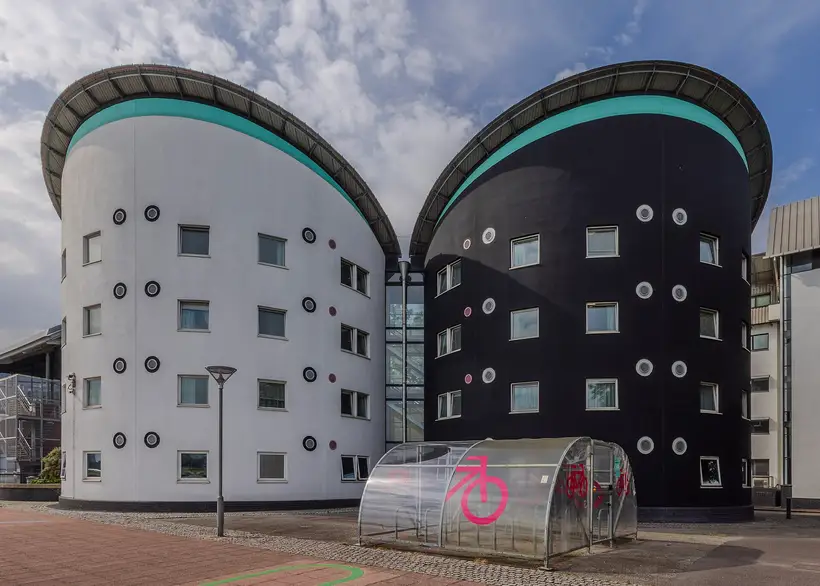
University of East London
Docklands, London
Share
University overview
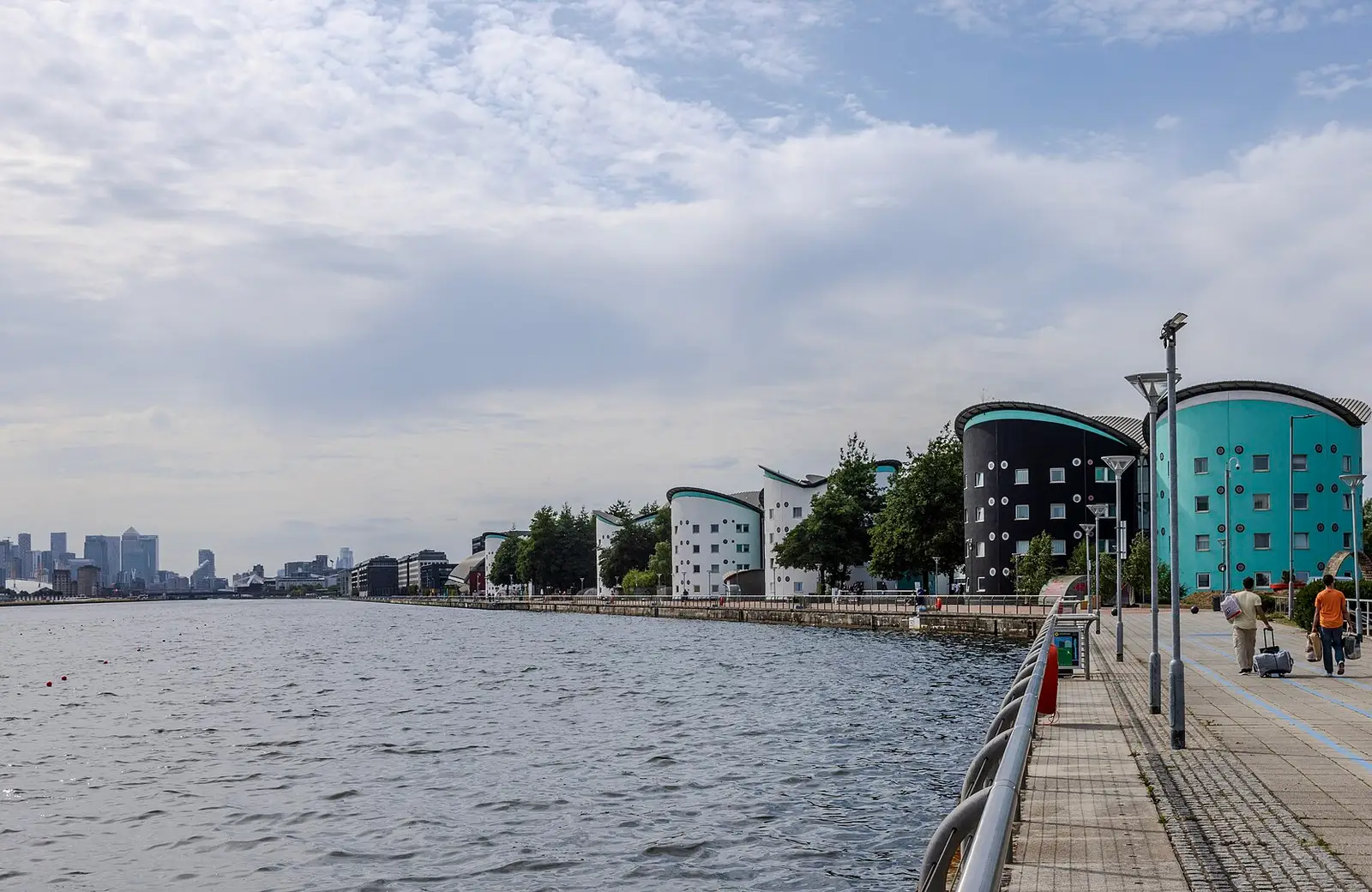
UEL is a public university with three sites across east London. Its Docklands campus sits beside the Royal Albert Dock, with other sites in Stratford.
Read the full overview
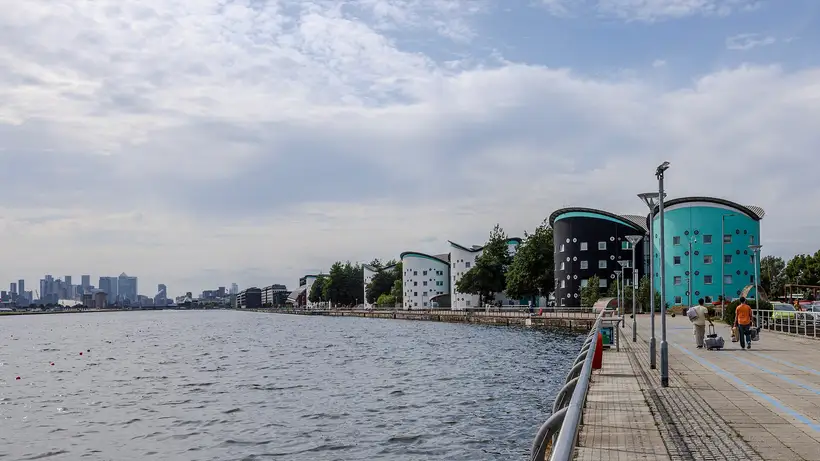
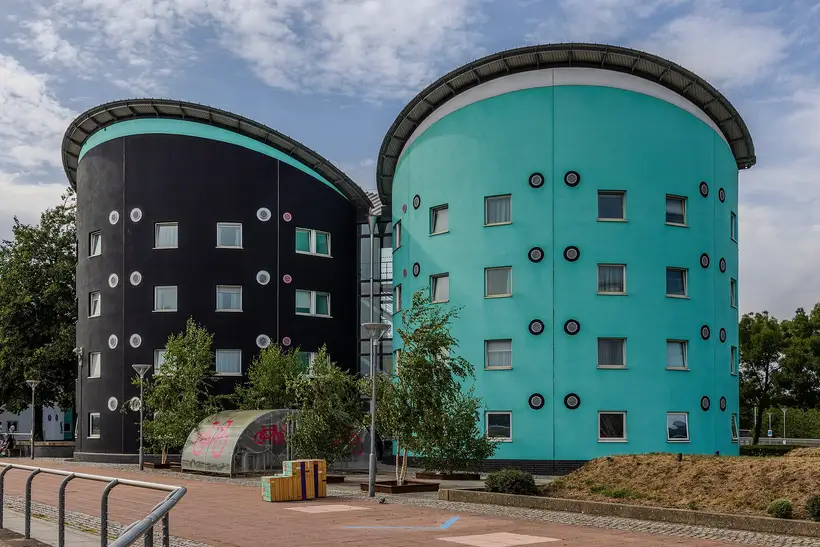
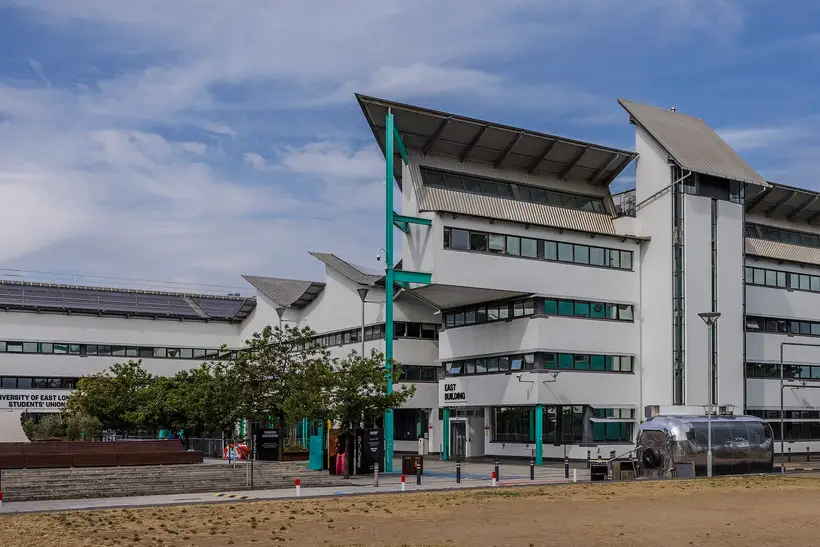
UEL's Docklands campus sits right on the water at the Royal Albert Dock. The DLR runs through the middle of the campus, City Airport is across the water, and the evenings by the river are genuinely lovely. Around eighty percent of students come from India, Pakistan, Bangladesh, Nepal and Nigeria, so the campus feels familiar from day one.
Being in London is the practical advantage. Part-time work has real demand here, and it is noticeably easier to find than outside London. It usually takes three to four months to land something, so start early and use your network. Around Christmas, hospitality shifts open up everywhere. And if you join in January instead of September, you get a three-month summer break where full-time hours are allowed.
Rooms near the campus cost around £350 to £650 a month. Staying in Stratford is the smart move: the free university bus runs every day, and it saves you around £50 a month.
The study style is what you make of it. Classes run two or three days a week and the rest is your own research and project work. Do your assignments yourself, keep your attendance clean, and passing is comfortable. The real returns come from what you build alongside the degree: a portfolio, live projects, and genuine connections with your professors. A good professor here can change your direction, so approach them and ask.
The placement year is real, and support and CV guidance are always available. Most internships that come through it are unpaid, and that still counts, because UK experience is what opens the next door. Start applying from your first month rather than waiting for the placement year, and use the job fairs.
What you’ll find on campus
See all facilities
Where you’ll study
UEL has three sites in east London, and your course sets which one.
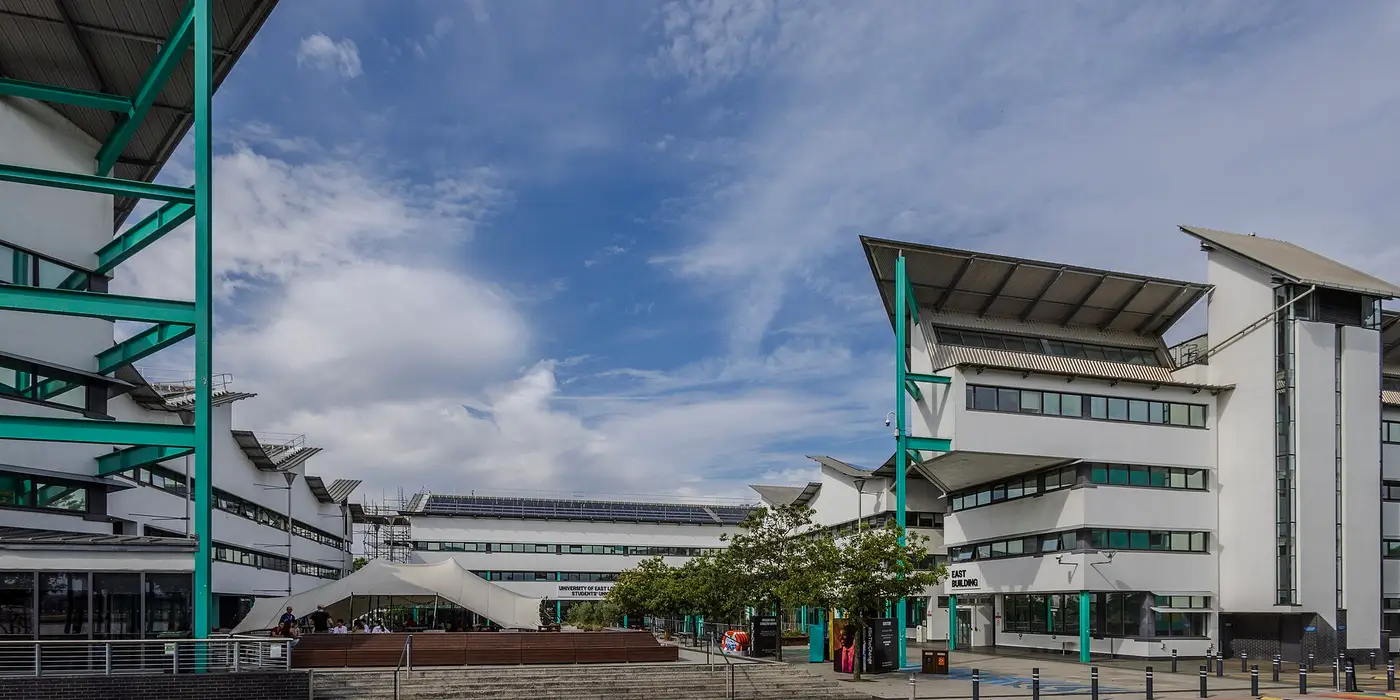
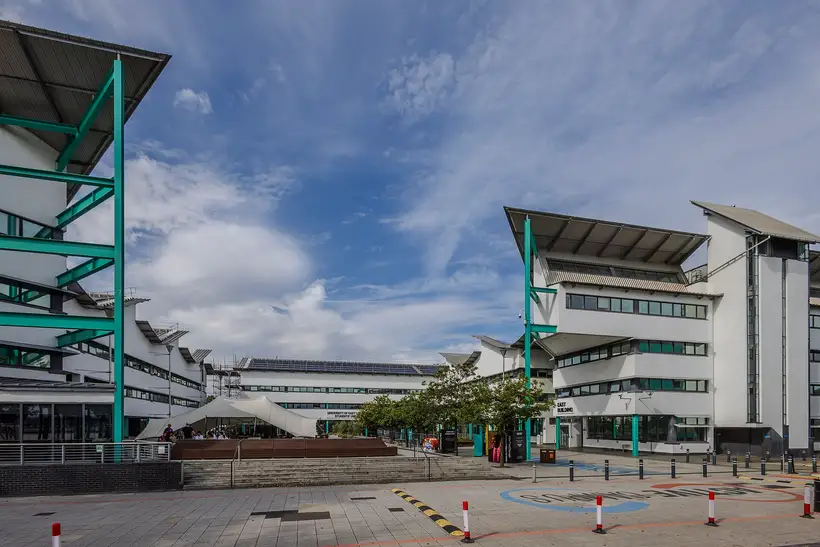
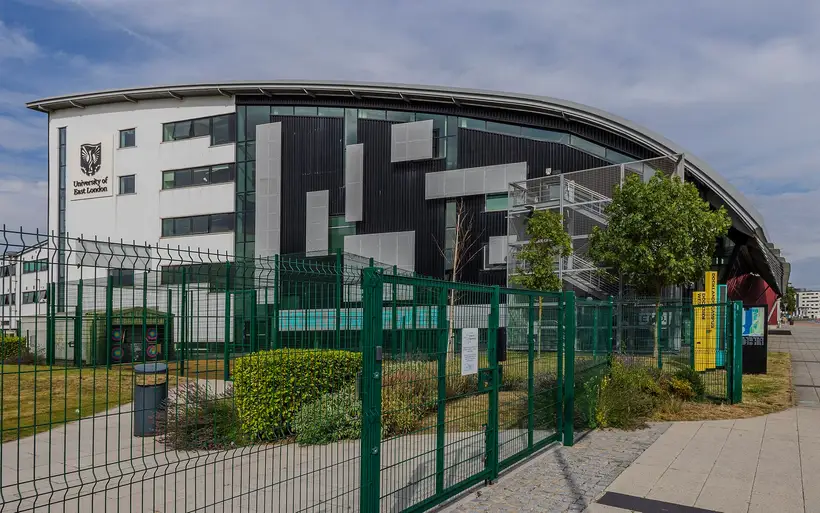
Docklands Campus
Royal Albert Dock, E16 2RD · Cyprus DLR at the door
Stratford Campus
Water Lane, E15 4LZ
MSc Public Health is taught here
University Square Stratford
1 Salway Road, E15 1NF
Shared site in Stratford
Explore campus in 3D
14 places to visit, quickest first
The map is not switched on yet.
Everything it would show is listed here, with the distance from the campus and how long it takes to walk.
- Explore campus in full 3D view.
- Check near by stations.
- View life around the campus.
Campus outline from OpenStreetMap contributors, under the Open Database License.
What students say
See the full rating breakdown
Education quality 3.0
It depends on the course, and on the professor you get. Classes point you in a direction. Most of the work after that is your own research, your projects and your assignments.
If a job is the goal, a live portfolio site with your work on it carries further than class marks. Update it weekly and show it to your professors. They give real guidance when you ask, and the right one can change your direction, so do not be shy about going to them.
Assignments 3.0
Assignments are rarely what fails people here. Most are coursework and projects rather than written exams, though that is set per course, so check yours.
If you can give them two days a week you should be comfortable. The students who do fail are usually the ones who never really started.
Part-time work in London 3.5
This is a London advantage, not a Docklands one. Any campus in the city has it. There is more part-time work here, and it is easier to find than outside London.
Most people take three to four months to land something, and some get there in the first month. A reference is what moves it fastest, so ask seniors, relatives or friends who already know the UK.
Job outcomes 2.0
A job to earn from is usually findable. A professional job in your field is hard, and that is the market as much as the campus.
What changes the odds is what you build alongside the course. A portfolio, projects that stand up, a local network, and the placement cell used properly. The campus gives you all four, and using them is on you.
International mix 2.0
Most students here are from India, Pakistan, Bangladesh, Nigeria, China and parts of Europe. That makes the campus feel familiar from day one, and it does mean a narrower mix than you might be picturing.
You are on campus two or three days a week, so London is where the wider network is. Events run constantly, and going to them is how people build it.
Life on campus 3.0
The campus sits on the river and the views are the best thing about being there. Evenings are quiet and genuinely pleasant.
Events run through the year, cultural and technical both. The station is a minute away, and there is a library, a gym, the placement cell, the free bus and the job fairs. People recognise each other here.
What students asked
The questions that came up most, answered.
Do they take education seriously?
Yes, and it works like most UK universities: no spoon feeding at masters level. Classes run two to three days a week depending on the course, and the rest of the time is for your own research and project work.
If I can't get an internship, is there a research option instead of the placement?
No. If an internship does not come, you get a simulated campus placement instead, which is unpaid. For many students, that is how it goes.
Read all student questions
Is the degree recognised? And will I find part-time work near Docklands?
The degree is fully recognised. Just remember that in this market, no degree hands you a job by itself. Your projects, portfolio and local network are what carry it, and that is how you take full value out of the campus and the country.
For part-time work, being in London helps a lot. Demand is high, and it is easier here than outside London. A reference makes the path much easier, so ask seniors, relatives or friends who know the UK. Your network makes life easy here.
Do companies tie up with the university? Will I get a job after the masters?
Companies here do not tie up with universities the way they do in India. You find and apply to companies yourself, through referrals, job portals and LinkedIn.
No university can promise a job. What moves the needle is your own work during the course. If money is not urgent, spend your early months on professional internships and portfolio work rather than restaurant or warehouse shifts. Paid or unpaid, local experience is what leads to a professional job later.
Teaching is the same story: they teach in class, and the rest is yours. The hard work pays off, not the classes alone.
What are exams and attendance like?
Most courses here are assessed through coursework and projects rather than written exams. Check your own course page to be sure, because it is set per course. You pass at 50%.
Attendance is strict: card taps for every class and sometimes manual checks. It matters for your visa, so treat classes as non-negotiable.
What is the learning environment actually like?
Business and IT courses are the strong suit right now, though the market keeps moving, so check it for your own field.
The rhythm is simple: classes two to three days a week, the library for depth, events around London for exposure, your own project work in between, and the placement cell for CV and application help.
Most students never use half of this. The ones who use all of it get the most out of the place.
Postgraduate courses
Browse the courses currently listed by UEL.
MSc Data Science
₹22 lakh (£17,220)Official page ↗
MSc AI and Data Science
₹22 lakh (£17,220)Official page ↗
MSc Computing
₹22 lakh (£17,700)Official page ↗
MBA
₹24 lakh (£19,500)Official page ↗
MSc Computer Science
₹22 lakh (£17,220)Official page ↗
MSc Artificial Intelligence
₹22 lakh (£17,220)Official page ↗
MSc Cyber Security Engineering
₹22 lakh (£17,220)Official page ↗
MSc Information Security and Digital Forensics
₹22 lakh (£17,220)Official page ↗
Nothing by that name in the eight we have read.
See all postgraduate coursesFees by intake
View the full fee table
UEL publishes an international fee on the September tab only, so January and May are course by course. UEL international fees ↗
Up to ₹11 lakh (£8,610) off the fee, if your grades qualify UEL takes half the fee off for high achievers on a masters, and another slice for paying the year up front. On the ₹22 lakh (£17,220) most courses here charge, that is what each one is worth. UEL, postgraduate scholarships and bursaries ↗
The placement year
A student explains the two-year route.
What to do if the placement never comes
Mee Meghna
What UEL says if the placement does not come
If you do not secure a placement after completing your taught modules and dissertation, you will transfer back to the one-year full-time MSc programme without the placement. If you hold a Student visa, your visa will be curtailed in line with UK Visas and Immigration (UKVI) requirements.
uel.ac.uk postgraduate industrial placementWhat students discuss elsewhere
External discussions are shown separately from uniwise reviews.
See all 6 Reddit discussions
How these reviews arrived
Thirteen of the twenty most recent reviews were posted on one day, 3 June 2026. Several are a single line and one of them is about a campus fair.
Trustpilot's own page says this company has not invited customers recently and has not replied to its negative reviews.
Student videos
Students who filmed the campus themselves. Three of the five are in Telugu.
What does the place actually look like
Around the Docklands campus, in Telugu
londonloakshay
A second pair of eyes
A second walk around, filmed by a student
MALATHI THO MUCHATLU
See all videos
What the first month is like
One month in, interviewed on campus
Abdul-Rehman Abroad
A student explains the two-year route
What to do if the placement never comes
Mee Meghna
The step between an offer and a visa
Passing the Pre-CAS interview
VHaari Vlogs
Other universities to explore
See all similar universities

Building uniwise
If something about this university is unclear, ask us. We’ll point you to the information on this page.
Ask a questionNeed help applying? See application support →
University details
Contact, useful links and page information
What nobody publishes
- Whether the postgraduate industrial placement is paid. Neither the placement hub nor any of the six eligible course pages says.
- How many students actually secure a placement. UEL publishes no conversion rate and no regulator collects one for taught postgraduates.
- Pass and resit rates for international students. Not published by UEL, HESA or the Office for Students.
- A backlogs policy for Indian applicants. Not published anywhere on uel.ac.uk.
- Whether a Medium of Instruction letter is accepted in place of IELTS.
- The international fee for the January and May intakes. Those tabs publish Home rates only.
The official record
- £30,000 Median earnings 15 months after the course. Undergraduate courses. Discover Uni publishes no equivalent for taught postgraduates.
- 70% In work or further study 15 months after the course, business and management. Undergraduate courses. No domicile breakdown is published.
- 95% Still on the course after one year. Undergraduate courses.
- Silver overall, Student Experience Bronze, Student Outcomes Silver Teaching Excellence Framework. The whole provider.
Where the numbers come from
- uel.ac.uk international fees
- UEL Academic Regulations, Part 3, paragraphs 14.1 and 15.1
- Discover Uni, the official record
Photograph: uniwise. Last checked 28 August 2026.
Something missing? Suggest an update →